History Notes - The Monterey Cafe
The Monterey Café — Barraba
Anna Cominakis, Effie Haggis and Kathleen Psaltis
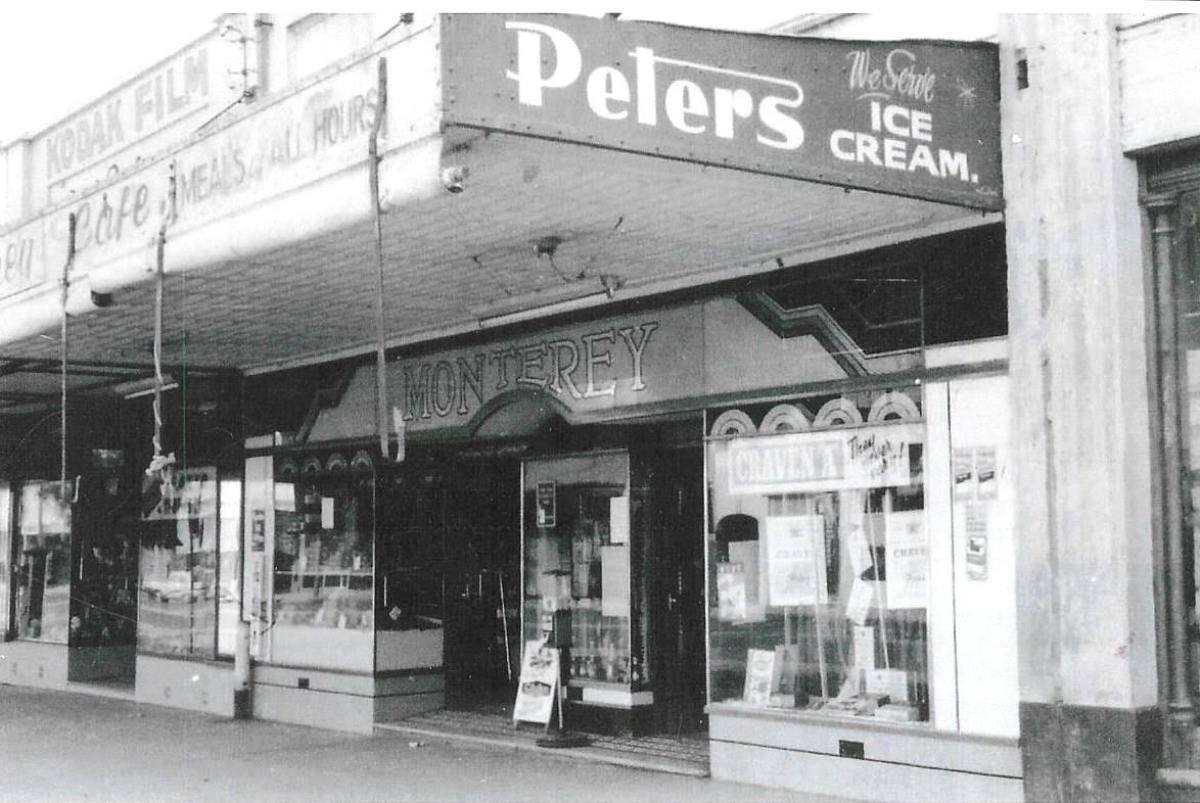
The Monterey Café was situated at 111 Queen Street, Barraba, built early 1930s. It was owned by business partners, James Sofianos and Jack Conomos. Both men hailed from the Greek islands, James from Lesvos and Jack from Kythera.
The two men originally opened the Empire Café adjoining the Empire Theatre in 1928. Jack, his wife, Irene and their five children lived in the residence at the back of the café which is now the Backpackers. Business grew and they soon needed larger premises, so the two men bought land opposite their smaller existing Empire Café and the Monterey was built.
Jim and Jack loved Barraba. It was a bustling, prosperous town where they were made welcome. 1937 saw Jim return to Greece for a holiday, and while there he married Electra and the newlyweds returned to Australia in 1939. In the mid 1940’s Jack and his
family left Barraba, while Jim and Electra stayed on.
After Jim’s untimely death in 1950, Electra’s young brother, Jim Sarikas, at the tender age of 21, took over the helm of this very busy café. He had been in Australia for a scant three years.
The building was Art Deco, the trend of the day. It was modelled on the latest American cafes, hence the American name. The shop front consisted of three large display windows, with gold and glass double doors either side of the centre window. Fruit was displayed and sold from the first window. The smaller centre window showcased refreshment suggestions. Cups and saucers on a silver tray with a silver sugar basin and milk jug and biscuits were there, as well as fake wax ice cream sundaes and ads for fruit drinks. The third window, dare we say, was for cigarette advertising, decorated by the cigarette companies with oversized cigarette boxes and a few streamers.
On entering the cafe, the front section was tiled with small white hexagonal tiles, bordered with a black and white key design. On the left side of the shop stood the sweet showcase. Loose lollies in glass compartments filled the top section. Spearmint logs, butter balls, liquorice allsorts, fruit pastilles and jubes, to name some. These were scooped into paper bags and weighed on the large scales which sat on the counter.
Boxed chocolates - everything, including Nestle Winning Post, Rowntree Romance, MacRobertson, Old Gold, Cadburys and tins of toffees. At Easter time, Easter eggs, which were an expensive treat back then, were showcased in the bottom section. Behind the counter were display shelves with more chocolates, chocolate bars and sweets. On the back wall, between the fruit window and chocolate display was a glass case where cigarettes and tobacco were kept. Below this was a display of other “necessities”. Tallyho and Zigzag cigarette papers, Federal and Redhead matches, Aspro and Bex and Vincent’s headache powders - all politically incorrect now!
Next to the sweets counter stood a delicatessen display refrigerator full of smallgoods. Saveloys and frankfurts, ham and corn beef were displayed along with long rolls of Devon and garlic sausage, ready to be sliced, weighed and sold. Continuing along was the soda fountain. The original one was all marble with chrome soda levers that dispensed soda water for making soft drinks and ice cream sodas. Due to gas leaks from the motor, this fountain was replaced with a modern stainless steel milk bar in the 1950s. This new modern one had large, round refrigerated holes for storing five gallon galvanised metal drums of ice cream. The ice cream was delivered in “shippers” which were big canvas bags packed with dry ice and came on the train from Tamworth. Fruit juices (orange, lemon and pineapple) were all made with fresh fruit in house and milk was also stored there.